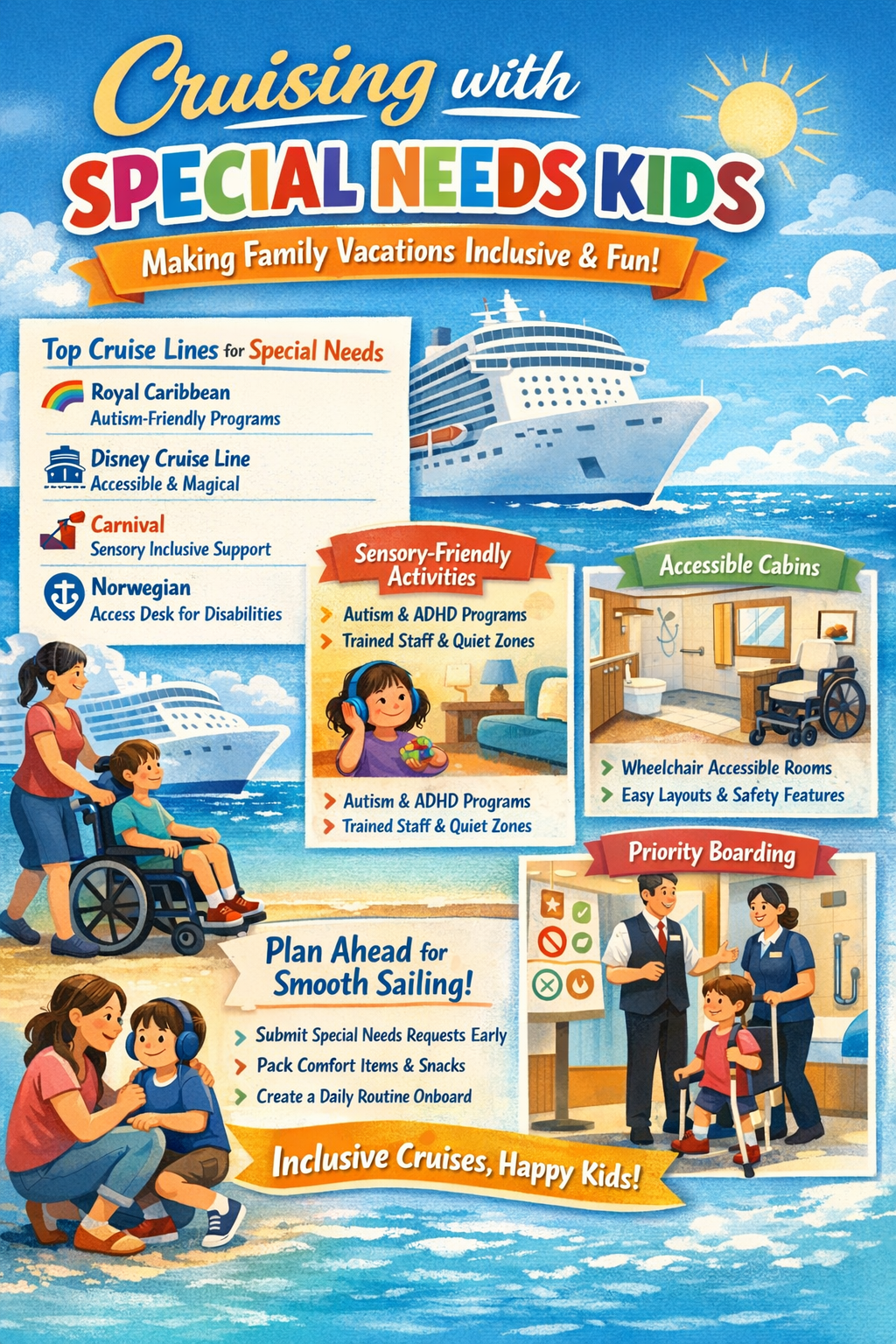
(Autism, Asperger’s, ADHD, sensory processing needs, developmental disabilities, and physical/mobility disabilities)
Cruising can be an amazing fit for many families because you get one “home base” cabin, predictable meal times, and built-in entertainment without constant packing/unpacking. The key is choosing a line that matches your child’s needs and doing smart pre-cruise planning. 💛
1) Royal Caribbean
Known for autism-friendly initiatives (sensory-friendly activities, trained youth staff support, dietary options, and priority-style processes like expedited check-in on select programs). (Royal Caribbean)
2) Celebrity Cruises (same parent company ecosystem as Royal)
Also promotes autism-friendly initiatives with sensory-friendly options, dietary accommodations (including gluten-free/dairy-free), and policies that can help some families (ex: certain youth-program exceptions). (Celebrity Cruises)
3) Carnival
Carnival highlights being “sensory inclusive” (KultureCity) with trained guest-facing crew and support for sensory/cognitive needs like Autism/ADHD. (Carnival)
Disney Cruise Line (excellent Special Services process + accessible ship design focus) (Disney Cruise Line)
Norwegian Cruise Line (clear “Access Desk” process and timelines) (Norwegian Cruise Line)
Princess (built-in app workflow for accessibility & dietary requests) (Cruises)
MSC (requires a form; clear “no fewer than 30 days” guidance) (MSC Cruises)
Holland America (strong “planning ahead” accessibility emphasis; SRI form) (Holland America Line)
Consider Autism on the Seas “staff assisted cruises,” where trained staff help families navigate onboard experiences and provide supported activities/sessions. (Autism On The Seas)
Why families love it
Autism-friendly initiative with sensory-friendly programming, staff training emphasis in youth areas, and other supports. (Royal Caribbean)
Often a great match if your child thrives with busy options + the ability to retreat to your cabin.
Good to plan for
Ask about: boarding support, quieter seating options, youth program accommodations, and food needs in advance.
Why it can be a great fit
Promotes autism-friendly initiatives (sensory-friendly options, toys/films) plus dietary accommodations (including gluten-free/dairy-free) and some youth policy flexibility on select programs. (Celebrity Cruises)
Often feels a bit more relaxed/less “kid-chaos” than some mega-family ships (varies by sailing).
Why it can work well
Carnival states it’s certified “sensory inclusive” through KultureCity, and highlights training for guest-facing crew to support sensory/cognitive needs (Autism/ADHD, etc.). (Carnival)
Good value for families who want lots of onboard energy with support available.
Why families choose Disney
Disney offers a dedicated Guest Services/Special Services process for disability-related needs, plus accessible staterooms and planning resources. (Disney Cruise Line)
Disney also publishes guidance specifically for guests with autism spectrum disorder. (Disney Cruise Line)
Best for
Families who want high structure, strong family programming, and a line that is very used to working with children’s needs.
Why it’s helpful
NCL’s “Access Desk” supports guests with disabilities/special needs and publishes clear timelines (example: 90 days for interpreters and 45 days for other needs). (Norwegian Cruise Line)
Also outlines dietary request processes and notice windows for certain items (example: kosher/gluten-free products may need advance notice). (Norwegian Cruise Line)
Why it can be easy
Princess directs guests to use the MedallionClass app to submit accessibility & dietary requirements and provides a dedicated dietary contact path. (Cruises)
What matters
MSC asks guests to submit accessibility/medical/dietary needs preferably at booking or no fewer than 30 days prior to departure. (MSC Cruises)
Great option when families are organized and proactive with forms.
Why it’s notable
HAL emphasizes planning ahead and submitting a Special Requirements/Accessibility form well in advance. (Holland America Line)
Often quieter onboard atmosphere, which some sensory-sensitive kids do better with (ship/sailing dependent).
Every cruise line has a process—use it as soon as you book.
Submit forms and requests in writing (email/portal/app) and keep screenshots.
Reconfirm again 1–2 weeks before sailing, and again at embarkation (Guest Services / dining team / youth team).
Examples of published timelines:
NCL: 90 days for interpreters, 45 days for other needs (Norwegian Cruise Line)
MSC: no fewer than 30 days (MSC Cruises)
Most major cruise lines can accommodate common needs, but you’ll get the best outcome when you:
Notify the line at booking + submit forms
Speak with the dining team right away onboard
Consider bringing backup safe snacks for excursions/port days
Published examples:
Celebrity: lists dietary accommodations including gluten-free/dairy-free as part of autism-friendly supports (Celebrity Cruises)
NCL: notes advance notice needs for certain dietary requirements (ex: kosher/gluten-free products may require advance notice) (Norwegian Cruise Line)
For sensory needs
Prefer: mid-ship, lower decks (less motion), away from elevators/venues
Consider: balcony for fresh air + decompression (if safe for your child)
For mobility needs
Request an accessible stateroom (roll-in shower where available, grab bars, turning radius)
Confirm doorway widths if using a power chair
Ask about bed configuration: twin-to-king conversions, room for medical equipment, etc.
Cruise kids clubs are fantastic, but they’re not medical childcare.
What to ask before you sail:
Can my child attend with a 1:1 caregiver?
Any toileting requirements? (Some lines list exceptions in specific autism-friendly programs.) (Celebrity Cruises)
Can they provide a quieter space, visual schedules, or allow breaks?
What happens if my child elopes/wanders?
💡 Tip: Many families do best with a blended plan:
structured kids club time + family time + planned decompression breaks
Ships have medical centers, but they are not pediatric specialty hospitals.
For complex medical needs: bring a printed “care plan” (diagnoses, meds, baseline behaviors, triggers, de-escalation steps).
If your child has seizure risk, allergies, or feeding equipment needs, travel with extra supplies and a contingency plan.
Eat before you arrive at port
Noise-cancelling headphones, snacks, comfort items in a small backpack
Ask about priority/assisted boarding options where applicable (varies by line/program) (Royal Caribbean)
Get to your muster procedure early; ask for the calmest option available
✅ Choose the ship style your child tolerates (busy mega-ship vs calmer ship)
✅ Confirm accessible cabin inventory if needed
✅ Submit special needs/access request forms
✅ Submit dietary/allergy requests
✅ Ask about medical equipment storage & power needs (CPAP, feeding pump, etc.)
✅ Reconfirm requests (get names + reference numbers)
✅ Pack a “day 1” backpack: meds, snacks, headphones, comfort item, change of clothes
✅ Visit: Guest Services + Dining team + Youth program desk (same day)
✅ Create a simple daily routine (meals, breaks, quiet time)